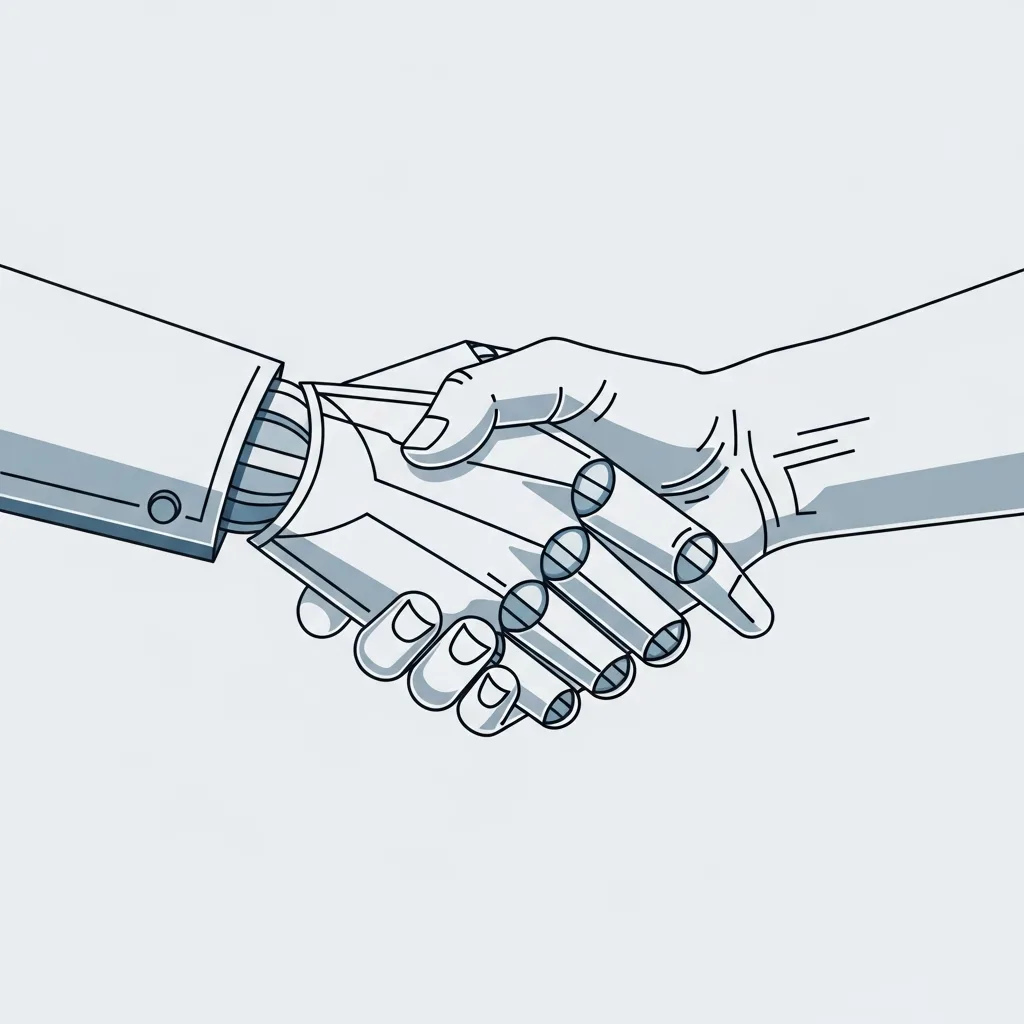
AI is not coming for product managers. It's already here — reshaping how we research, how we write, how we analyze data, and how we make decisions. The PMs who understand what's actually changing will be far more effective than those who are still debating whether to care.
Three years ago, I wrote a quarterly strategy document that took me two full days. Research, synthesis, competitive analysis, user data review, stakeholder input synthesis, and finally writing. Two days for a document that, in retrospect, was about 60% as useful as it should have been given the time invested.
Last quarter, I did the same process in five hours. Better research. Deeper synthesis. More complete competitive landscape. More specific user insights. The tools I was using handled the information gathering and initial structuring; I handled the judgment, the prioritization, and the writing. The output was meaningfully better. The time was dramatically less.
This is what AI is doing to product management. Not replacing judgment. Compressing the time between information and insight.
Where AI Is Actually Changing the Job
User research at scale
Traditional user research is expensive and slow. Recruiting, scheduling, conducting, transcribing, and synthesizing interviews takes weeks and produces insights from a small sample. AI tools can now analyze thousands of support tickets, app store reviews, customer success call recordings, and survey responses in minutes, surfacing patterns, common themes, and outlier signals that would take a human team weeks to identify manually.
This doesn't replace qualitative research — it augments it. The AI tells you where to look. The human researcher goes deep on the important questions. The combination is more powerful than either alone.
Competitive intelligence
Keeping up with competitor products, pricing changes, feature announcements, and market positioning used to require either a dedicated research function or a PM who spent significant time on competitive monitoring. AI tools can now track competitor websites, product changelogs, press mentions, job postings (which signal where competitors are investing), and user reviews — and synthesize the relevant updates weekly. The PM gets competitive intelligence without the competitive monitoring.
PRD and documentation
First drafts of product requirement documents, user stories, acceptance criteria, and feature specifications are now much faster to produce with AI assistance. The PM provides the context — the problem, the constraints, the target user, the success criteria — and the AI produces a structured first draft. The PM edits, refines, and adds judgment. The result is often better than what the PM would have written from scratch, because the AI draft surfaces gaps and edge cases the PM might have missed.
Data analysis
Querying data, building analyses, and interpreting results used to require either SQL skills or a data analyst's time. Natural language data interfaces are increasingly making this accessible to PMs who can describe what they want to know without writing queries. This is still early, but the direction is clear: PMs who can formulate good analytical questions will have much more data access than PMs who need to wait for analyst support.
What AI Is Not Changing
The parts of the PM job that AI makes faster are, without exception, the parts that involve processing and synthesizing existing information. The parts AI cannot do are the parts that require judgment about what matters — and why.
AI can tell you what 10,000 users said in their support tickets. It cannot tell you which of those problems is worth solving, in what order, for which segment, with what priority relative to the business's strategic position. That requires a human who understands the business, the users, and the market in combination.
AI can generate a PRD structure. It cannot write the section that explains why we're making this particular trade-off in this particular way, given our specific context. That explanation requires judgment that comes from being embedded in the organization, knowing the team's constraints, and understanding the business strategy.
AI can analyze churn data and surface patterns. It cannot make the judgment call that this particular churn pattern matters more than another, given what you know about customer segment economics that isn't in the data.
The PM's value has always been judgment under uncertainty. AI increases the information available to that judgment — which makes the judgment more important, not less. The PM who uses AI well is exercising better judgment with better information. The PM who doesn't use AI is exercising the same judgment with less information. Over time, that gap compounds.
The Skills That Become More Valuable
When AI handles more of the information processing, the skills that can't be automated become more valuable:
Stakeholder influence. Getting alignment, managing conflict, navigating organizational dynamics — none of this gets easier with AI. If anything, as teams move faster with AI assistance, the human coordination challenges intensify.
Strategic judgment. Which market to pursue. What to build versus buy. When to change direction. How to sequence capabilities. These are judgment calls that require contextual wisdom AI cannot replicate.
User empathy at depth. AI can summarize what users say. The PM who talks to users, builds genuine understanding of their lives and goals, and develops intuition for what they need but haven't articulated — that PM is doing work that AI cannot replace.
Writing that creates clarity. AI can produce competent prose. The PM who can write a document that creates genuine clarity — that makes a complex decision obvious, that aligns a team, that changes how stakeholders think about a problem — is doing work that's harder for AI to replicate well.
Adapting your PM practice for the AI era?
The PMs who figure out how to use AI well over the next two years will have a significant advantage. I've been thinking hard about this for a while and am happy to share what I've found. Let's talk.
Work with Yogesh →